
The HandyHeroes Project leverages the idea of “small repairs, big impact” through three key innovations: activating community-based talent (technician training), integrating community service with market mechanisms, and standardizing carbon reduction. These innovations address challenges such as service shortages in older residential communities, the lack of transparency in market-based repair services, and difficulties in managing household products without warranties. Currently, the HandyHeroes project provides services to over 450 residential communities across eight main districts of Xi’an, China. The model has also been adopted in 10 cities covering 100 communities nationwide, creating a low-cost, low-barrier, and sustainable approach to community micro-renewal and senior services. The Project’s achievement is reflected not only in carbon reduction metrics and tangible improvements to neighborhoods but also in raising public awareness that “repairing products is a form of environmental protection.”
Last update: 05 Nov 2025
189 Views
Photo and video gallery

Context
Challenges addressed
During its work on waste sorting, Shaanxi Green Origin Environmental Education Center discovered that in these communities, infrastructure and small appliances are often difficult to maintain or repair due to aging, posing significant safety risks and easily becoming solid waste. In the appliance repair industry, commercial repair services are mixed in quality. For example, workshop-style repairs lack systematic management and service quality assurance. Chain businesses, on the other hand, rely heavily on automated and digital services, lacking traditional booking methods like phone appointments, which are not age friendly. Many of these services also often replace rather than repair, charging high fees. Further, many small appliances including electric fly swatters, kettles, and rice cookers that could have been used after repair often become waste as commercial repair costs tend to exceed the cost of buying new ones. This not only leads to wasting resources but also increases carbon emissions due to new product purchases.
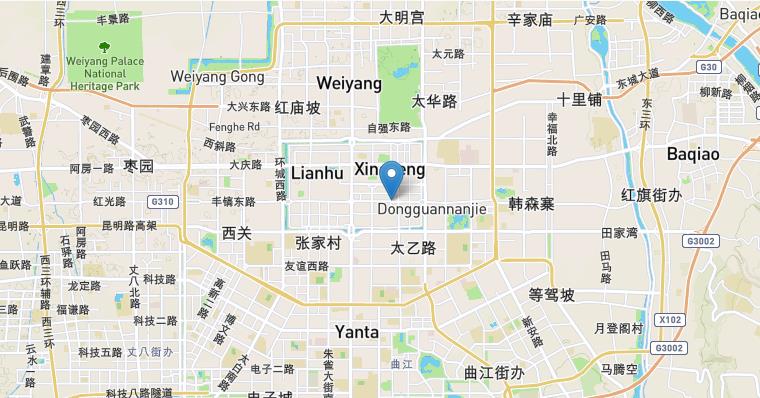
Location
中华人民共和国陕西省西安市
Process
Summary of the process
Since 2021, Green Origin has been collaborating with the community ‘s two committees to identify and train local repair teams through the launch of the 'HandyHeroes' initiative, which provides residents with services that blend commercial and community service elements.
The Project has organized community repair events on environmental awareness days such as Earth Day and World Environment Day. When repair staff visit residents’ homes, they also share concepts such as green living, low-carbon lifestyles, and upcycling. Residents in need of repairs can submit requests by contacting community staff, the repair hotline, or an online app. Service coordinators assign repair orders based on the locations of residents and repair staff. Repair technicians then visit homes to inspect, quote, and perform the repair, while residents complete a maintenance record form. After the service is completed, a follow-up call is made to gather feedback.
In 2023, with funding and support by the Stellar Partner Program, Green Origin expanded beyond Xi’an and began implementing and promoting its model nationwide. Within a year, the “HandyHeroes” initiative, in collaboration with local organizations, has already been implemented in 10 other provinces and cities.
Building Blocks
Gain Community Access, Build Trust, Understand Needs and Resources, and Joint Promotion
Identify and cultivate community technicians, enhance repair skills, and strengthen service awareness through training
Provide comprehensive, routine repair services
Encourage residents’ low-carbon behaviors
Impacts
HandyHeroes has been active in 450 residential communities across eight major districts of Xi’an, recruiting 128 skilled repair technicians from these areas to joined this platform and offer repair services. Half of the technicians were previously freelancers. The initiative also delivered 88 electrical safety training sessions for residents, To date, the Project has completed over 50,000 repair orders and has expanded to 10 other provinces.
Working with third-party greenhouse gas verification bodies, the Project has estimated emissions reductions from the various types of repairs: air conditioner (101.55 kg CO2e per order), washing machine (192.40 kg), electric fan (25.63 kg), induction cooker (95.60 kg), and gas stove (60.60 kg). Overall, repairs across10 household appliance categories have reduced over 5,000 tonnes CO2e.
Additionally, energy and water savings were achieved during repairs by installing energy-efficient light bulbs and water-saving faucets, improving energy efficiency by 70% and water efficiency by 30%, respectively. Technicians also provide in-home guidance on green living and promote the concept of “repair over replacement”, raising residents’ awareness of sustainable, low-carbon lifestyles.
Beneficiaries
The HandyHeroes Project primarily serves elderly residents in older communities, offering affordable repair services. Special groups such as veterans’ families, disabled persons, and low-income households receive free repairs and minor upgrades. The Project al
Sustainable Development Goals

Story
Personal Transformation:
From “Tool Novice” to “Home Engineer who can take apart a toilet”
Shen Yan is an operations coordinator for the HandyHeroes Project, where she works closely both with communities and repair technicians. When she first joined, she jokingly introduced herself a “tool novice”: “I couldn’t tell the difference between wrench sizes, even held a screwdriver backwards several times, and knew almost nothing about repairs.” At her first training session, she stared at the electric drill on the table, too nervous to pick it up: “That thing spins so fast, it looks dangerous! I can’t handle it.”
The change began with learning from others and having the courage to try. She often asked male technicians in the Project for advice: “Which part do you remove first when fixing a washing machine?” “How can you tell if a circuit board is shorted?” The male technicians generously shared their experience. Encouraged, she went home and dared to take apart her broken electric kettle: “The technician said, ‘Turn off the power before opening the casing.’ I followed the steps and discovered the thermostat switch was broken. I bought a new one for 10 yuan, replaced it, and it worked!” Later, when her faucet leaked or the showerhead clogged, she fixed them herself. “Replacing a faucet cartridge only costs a few dozen yuan. Turn off the main valve, remove the old cartridge, install the new one—done in half an hour.” Shen Yan shared short repair videos in the project group, becoming a source of inspiration for other women: “See? we women can really do it!”
Shen Yan transformed from a “tool novice” into someone who “dares to repair the whole household.” Once, she took on a bold challenge: her bathroom wall was leaking, and several technicians couldn’t find the cause. She remembered a trainer once said, “It might be the toilet flange adhesive delaminating,” and decided to take the toilet apart herself. “The technician explained me the steps, and I recalled them while I worked — and I actually managed to dismantle it!” After replacing the flange, the leak was fixed. “Hiring a technician would have cost at least 400–500 yuan; I spent only a few dozen buying the parts myself.” This experience gave her a huge confidence boost: “I realized I can solve problems with my own hands!”
Resources
Address: Room 1606, Building 2, Bixingyuan Residential Compound, No. 36 Zhichun Road, Haidian District, Beijing



Support the small green forces to grow